 Screenshot Maker
How to Grow Your Followers as a Solo Entrepreneur (5 Things That Actually Work)
Nobody tells you how lonely growing an audience is when you're doing it by yourself. No team to brainstorm hooks with, no designer to make things look good, no one to remind you to post when you've had a rough week. You open Twitter, stare at the compose box, and close the tab.
I've been there. Most solo founders have. And the advice out there, "just be consistent," "provide value," "post every day", is technically true and completely useless, because it doesn't tell you what to actually do on a Tuesday afternoon when you have zero ideas and zero followers.
So here are five things that actually move the needle, in the order I'd tackle them if I were starting from scratch.
1. Fix Your Bio Before You Post Anything Else
Here's a stat that should bother you: most people decide whether to follow you within about three seconds of landing on your profile. Three seconds. That's roughly enough time to read six or seven words.
If your bio says something like "Entrepreneur | Builder | Coffee enthusiast | Views my own," you've told a stranger absolutely nothing about why they should stick around. You just used your three seconds on nothing.
A bio that works usually has three ingredients:
- Who you help (not who you are — nobody cares about your job title, they care what you do for people like them)
- Proof, however small ("building X," "500 users," "ex-[recognizable thing]," or even just a specific, credible detail)
- A reason to click through — your link should go somewhere with a clear next step, not just your homepage
Compare:
❌ "Founder & CEO. Passionate about design and productivity."
✅ "I build screenshot tools for indie hackers. Currently at 2k users, sharing everything I learn along the way."
The second one tells you exactly who this account is for and gives you a reason to stay. It also sets up the next tactic perfectly, because now people expect you to actually share what you're learning.
One more thing — check your bio again in three months. What felt true when you had zero users will feel embarrassing when you have three hundred. Update it.
2. Share Your Numbers
This is the single biggest lever, and it's also the one people chicken out of the most.
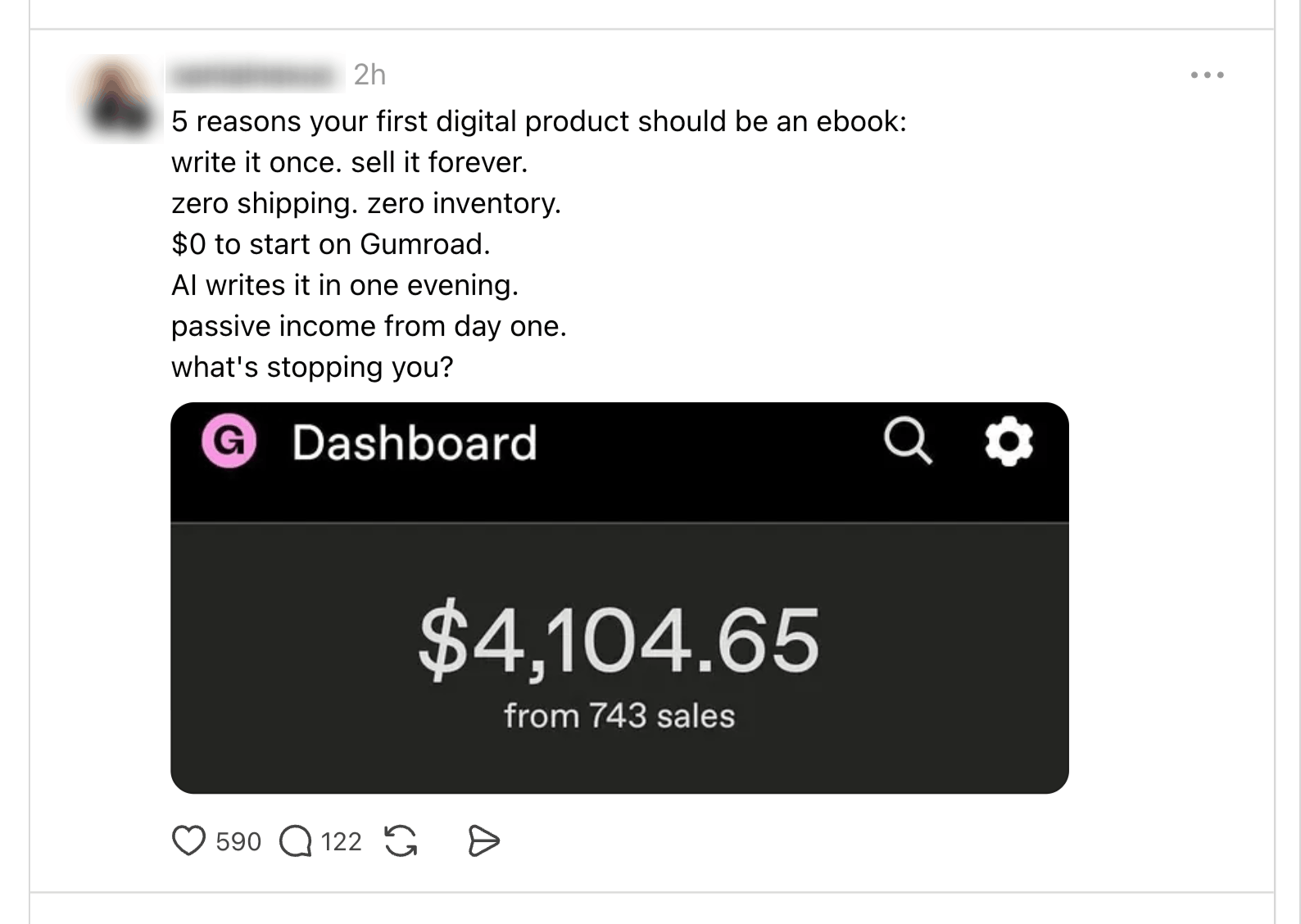
Polished, corporate-sounding content gets scrolled past. A screenshot of your actual MRR going from $412 to $890 in a month, with a caption about what you tried and what surprisingly didn't work? That gets saved, screenshotted, and shared. People don't follow brands. They follow people who are visibly figuring something out in public.
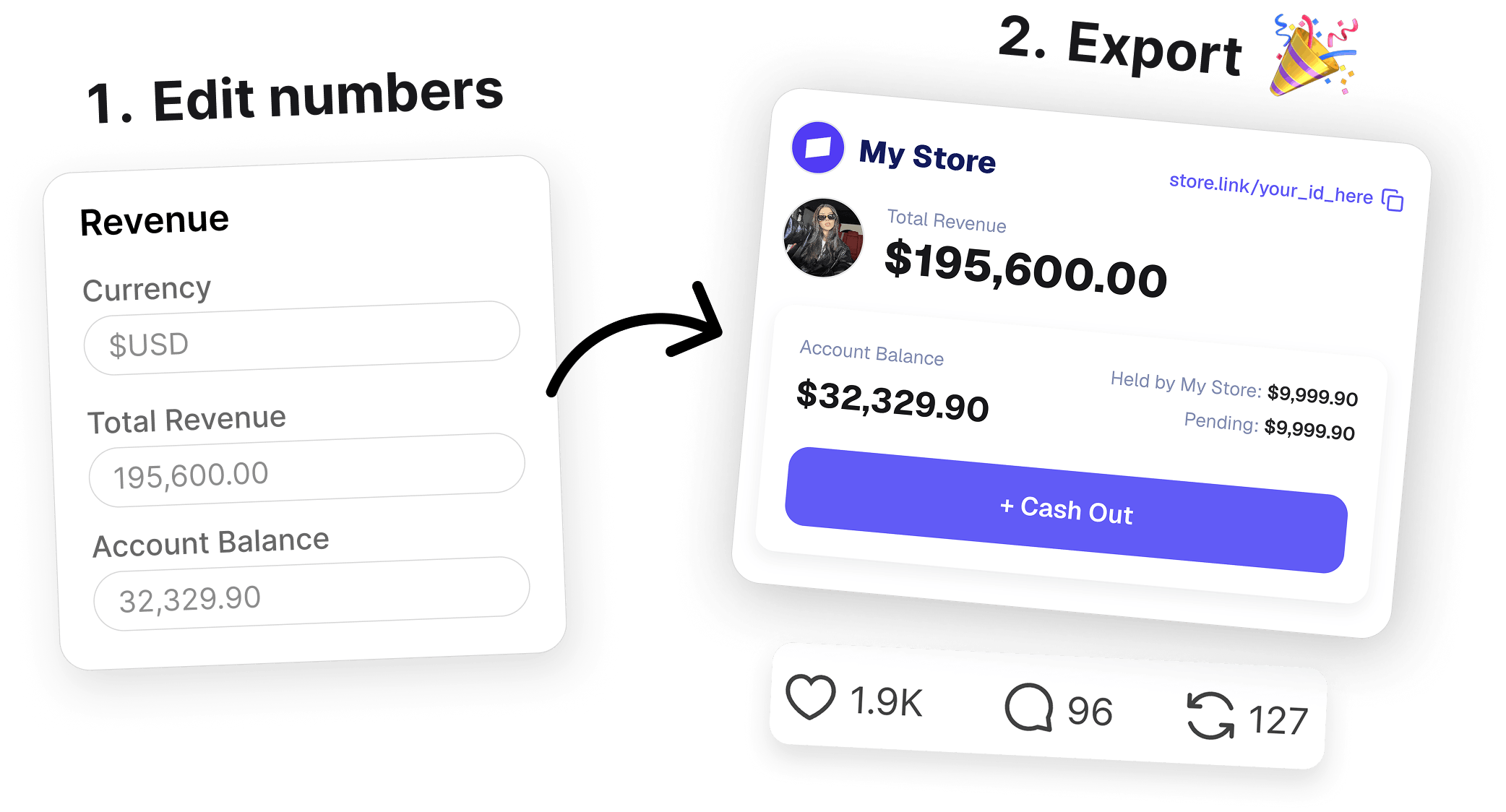
Create a screenshot to get more engagement.
Pick a template, edit the numbers, and export.
Start FreeWhat's worth sharing:
- Revenue or user growth, even if the numbers are small (small numbers with honest context are more compelling than big numbers with no context)
- A launch that flopped, and what you think went wrong
- A decision you reversed because it wasn't working
- A screenshot of a genuinely nice piece of feedback from a user
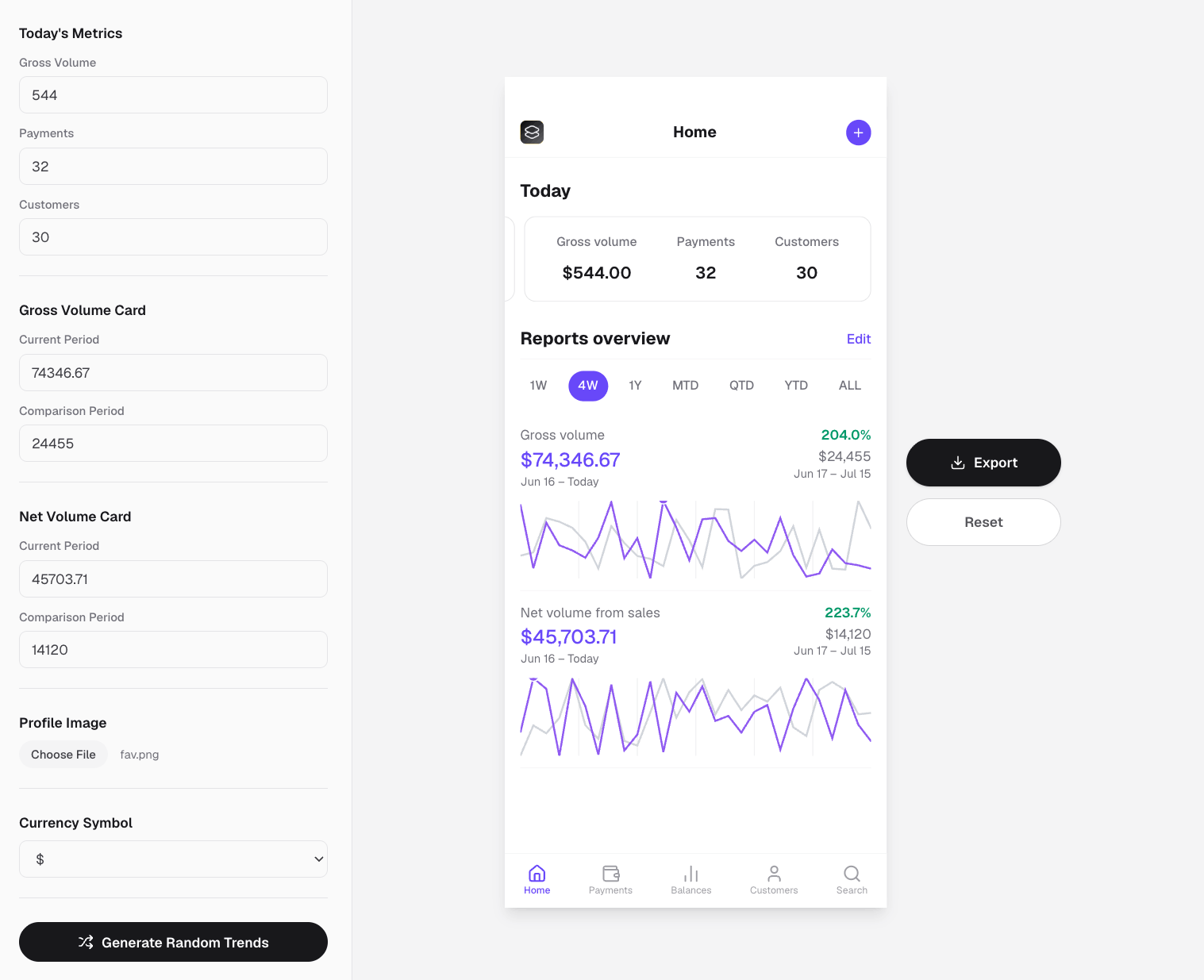
If you don't have real numbers yet, don't skip this. You can still turn whatever progress you do have into something visual and shareable. Even "day 1 of building this" or a before/after of your product's UI works, as long as it's honest. This is actually one of the more natural places to use a screenshot or template generator (this happens to be exactly what I build, so full disclosure) — it turns a plain data point or update into something that looks intentional enough to share, instead of a bare paragraph of text nobody stops scrolling for.
Do this on a rhythm, weekly recaps work well because people start to expect them, and expectation is basically the seed of a habit loop for your followers.
Try screenshotmaker.app for free
3. Study Accounts That Already Work
This is the fastest way to grow, full stop, and it's underused because people think "modeling" means copying, and copying feels dishonest.
It's not the same thing. Here's the difference:
Find three to five accounts in your niche with decent engagement relative to their follower count (an account with 5k followers and consistent 200+ likes is more useful to study than one with 100k followers and 40 like, the smaller one has a format that's actually working, not just a big inherited audience).
Then go look at their ten best-performing posts. Not their latest ten, their best ten. Ask:
- What's the actual structure? (Is it a hook line, then a list? A question, then a story? A screenshot, then a one-line take?)
- How long is a "typical" post for them?
- Do they open with a stat, a confession, a contrarian take, a question?
You're reverse-engineering a shape, not lifting a sentence. Your opinions, your numbers, your voice, all yours. But the container you pour them into can absolutely be inspired by what's already proven to work in your specific niche. Nobody invented the "here's what I learned from a failed launch" post format from scratch, and nobody should feel bad about using it.
4. Stop Creating From Scratch Every Time
You do not have the bandwidth of a content team, so stop pretending you do by trying to come up with a brand-new idea every single day.
Instead, treat every piece of content as raw material for three or four other pieces:
- A long build-in-public update becomes a thread, a single quote graphic, and a one-line "TL;DR" post a few days later
- A customer win becomes a testimonial graphic, a short story post about how it happened, and a follow-up post about what you changed because of it
- One good insight from a bad week becomes both a vulnerable, honest post now and a "here's what I'd tell myself a month ago" post later
Batch this on a Sunday if you can. Sit down for an hour, take whatever happened that week, and turn it into three or four different formats. It's a lot easier to edit four things that already exist than to summon one thing out of nothing on a Tuesday with no ideas.
5. Engage Before You Post
This one's boring, which is exactly why almost nobody does it, which is exactly why it still works.
Create a screenshot to get more engagement.
Pick a template, edit the numbers, and export.
Start FreeBefore you post anything of your own, spend ten minutes leaving genuinely thought-out comments on posts from accounts in your space — ideally accounts a bit bigger than you, with an audience that overlaps with the people you want following you. Not "Great post! 🔥" — an actual reaction, a related experience, a respectful pushback if you disagree.
Two things happen. Their followers see a smart comment and check out your profile (this is where tactic #1 pays off). And you start showing up as a familiar name in your niche before you've posted a single thing of your own.
Then, once you do post: reply to every single comment you get in the first hour. Engagement early in a post's life is one of the strongest signals you can send, and it's also just... the polite thing to do when someone took the time to respond to you.
A Quick Word on Consistency
None of this works if you do it once. It also doesn't need to be daily, daily is what breaks most solo founders within three weeks. Pick a cadence you can actually sustain for six months (three times a week is plenty), and be more consistent about smaller output than sporadically heroic about huge output.
FAQ
How often should a solo entrepreneur post to grow followers? Three to five times a week, sustained over months, beats posting daily for two weeks and burning out. Consistency compounds; intensity doesn't, if it can't be maintained.
What's the fastest way to grow followers with zero audience? Studying and modeling the format of accounts that already work in your niche (tactic #3) tends to produce the fastest early traction, because you're not guessing at what works, you're starting from something proven and adding your own voice.
Is it okay to model other accounts' content? Yes, as long as you're copying the structure and format, not the specific ideas or wording. Every content niche has a handful of formats that work, question hooks, before/afters, contrarian takes, and reusing a proven container isn't the same as plagiarizing.
What if I don't have real results to share yet? Share the process instead of the outcome, what you're building today, a decision you just made, a problem you're stuck on. Turning even small, honest updates into a clean visual (rather than a plain paragraph) makes them far more shareable, even before you have big numbers to show off.
Building something and want to turn your milestones into something worth sharing? Screenshotmaker.app turns a plain screenshot or data point into a polished, on-brand graphic in seconds, no design skills required.